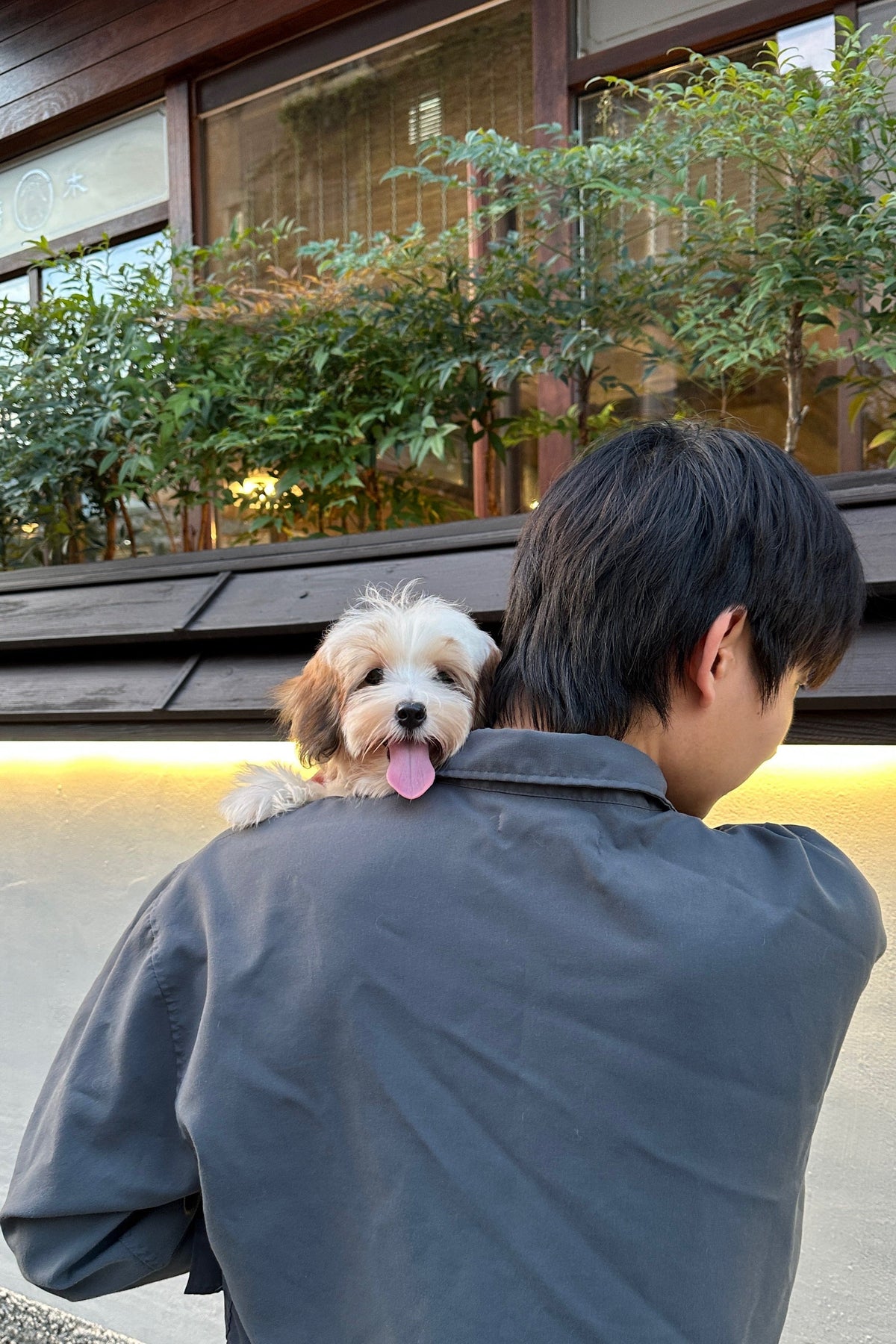
Why Does My Coton Do That? 12 Coton de Tuléar Behaviors Explained 🐾
Breedpedia Ep.32 — "Why does my Coton do that?" Following you to the bathroom, zoomies, hopping on two legs, splooting, head tilts, "talking," butt nudges, right-side tail wags, copycat yawns and stolen socks, explained in 88 seconds.
Quick answer: Most of the funny things a Coton de Tuléar does at home come back to one fact: it was bred to be a companion dog. That is literally the job the FCI standard (No. 283) gives it, and the standard describes a dog that is "very sociable with humans." That is why Cotons follow you from room to room, which is how they earned the nickname "velcro dogs." Zoomies are a normal burst of pent-up energy and excitement. Hopping on the hind legs is a classic Coton party trick, but it should not be encouraged in puppies under a year old. Splooting (lying flat with the back legs stretched out like a frog) is usually just a comfy stretch or a way to cool the belly on a cold floor. Science backs up three of the cutest habits. Dogs that know many toy names tilt their heads more when they hear those names (2022). Dogs wag more to the right when they see their owner (2007). And in one study, dogs caught yawns more often from their owners than from strangers (2013), although not every study agrees. The AKC standard notes that Cotons are "known for expressing unique vocalizations," so yes, yours may "answer back." Circling before lying down is usually explained as an old nest-making habit, though nobody has proven it. A butt nudge is usually a friendly, trusting request for a scratch. Stealing socks is an invitation to play, best answered with a trade, not a chase. Cotons do not do well left alone for long hours, so practise short absences from puppyhood. And a few look-alike behaviors (constant scooting, endless circling, sudden head tilting with balance problems) are vet questions, not personality.

Why does my Coton follow me everywhere, even to the bathroom? 🚪
Because keeping you company is its job description. The Coton de Tuléar comes from Madagascar (the full story of the port of Tuléar, the shipwreck legend and the "Royal Dog of Madagascar" is in our first Coton de Tuléar episode). It never herded sheep or guarded a gate. The FCI classifies it in Group 9, "Companion and Toy Dogs," with the utilization line simply reading "Companion dog," and describes its temperament as "Of a happy temperament, stable, very sociable with humans and with other dogs."
Generations of being bred to stay close to people produce a dog that wants to know where you are. That is why Coton owners jokingly call them "velcro dogs": you stand up, the Coton stands up; you go to the bathroom, a little white face waits at the door. The nickname is an owner's term, not an official one, and plenty of other companion breeds share it.
Following you is normal and sweet. What you want to avoid is a dog that cannot cope when it is not next to you. Panting, pacing, howling or scratching at the door every time you step out of sight is a sign to start the gentle alone-time training described further down.

Puppy vs. adult: why do some Coton puppies have colored ears? 🐶
As a puppy, a Coton often looks like a little cotton ball with a hint of color, and that color can change as it grows. The AKC standard says "Puppies with color under 12 months of age" may show light tan, light brown, dark brown, chestnut or grey on the head and body, and that these colors "have the potential to fade." The parent club's study guide adds that puppy markings can appear on the head, ears and anywhere on the body, and fade progressively as the Coton matures. So the champagne-tipped ears in the video are a typical puppy look, and many of them turn lighter with age.
In an adult, the coat should be white. The FCI standard tolerates a few slight shadings of light grey or red-roan (a mixture of white and fawn hairs, also called "lemon") on the ears; the AKC allows light grey or light tan shadings on the ears but notes they are "only tolerated but are not desirable." Heavy markings, or any definite black marking, are disqualifying in the FCI standard. Pet Cotons with soft ear shadings are just as lovely; the rule only matters in the show ring.
All grown up, a Coton stays small but sturdy. The FCI standard gives 4–6 kg for males and 3.5–5 kg for females, with a height of 26–28 cm (males) and 23–25 cm (females); the AKC standard's ideal is 9–15 lb for males and 8–13 lb for females (about 3.6–6.8 kg). A cotton plush on the outside and, as the AKC standard puts it, "gay and energetic, and at times boisterous" on the inside.
Why does my Coton suddenly run around the house? (The zoomies) 💨
Every Coton owner knows the scene: the dog freezes, its eyes go wide, and then it races laps around the sofa, skids round corners and dives into its bed, ears flying. Behaviorists call these FRAPs, short for frenetic random activity periods; everyone else calls them the zoomies. Cornell University's Riney Canine Health Center describes FRAPs as normal; they appear to be a way for dogs, especially puppies and young dogs, to release pent-up energy, excitement or even a bit of stress, and they often come at predictable times: after a bath, after a walk, when you come home, or in the evening.
The zoomies are not a sign that something is wrong, and a short burst is nothing to stop. Just make the "racetrack" safe: put a rug or runner on slippery floors (small dogs' knees and hips do not love skidding on tiles or laminate), move breakable things and keep the dog away from stairs. If your Coton gets the zoomies every evening, it may simply need a little more play or a sniffing walk earlier in the day.

Why does my Coton stand and hop on its hind legs? 🎪
Because it is a Coton. Standing up on the back legs, waving the front paws and bouncing forward is the trick Coton owners love to show off most, and many Cotons do it on their own when they are excited or want your attention. It fits the breed's clownish, people-focused personality: up on two legs, the dog is closer to your face and impossible to ignore.
One important caution: the American Coton Club notes that "dancing" on the hind legs should not be encouraged in a young puppy until the growth plates close at around one year of age. Until then, reward four paws on the floor instead of teaching your puppy to beg on two legs. Even for adults, keep hind-leg tricks short, never on slippery floors, and stop if your dog seems stiff or reluctant. Small breeds can have knee problems such as patellar luxation, so ask your vet if your Coton skips, limps or holds up a back leg.

Why does my Coton lie flat like a frog? (The sploot) 🐸
That flat, legs-out pose has a name: the sploot. The dog lies on its belly with one or both back legs stretched out behind it like a frog. Most of the time it simply means the dog is comfortable and getting a nice stretch through the hips. It is also an easy way to press the belly, where the fur is thinnest, against a cool floor, which is why you often see it on tiles, in the bathroom or by the front door on warm days.
In Korea there is a seasonal twist: in winter, with the ondol underfloor heating on, many dogs move off the warm floor to the coolest spot in the house, and in summer the bathroom tiles are a favorite. Splooting is normal for healthy, flexible dogs. Only a change is worth a vet visit: if your Coton suddenly sploots far more than usual, struggles to get up afterward, or seems stiff or sore in the back legs, ask your vet to check its hips and knees.

Why does my Coton tilt its head, and why does it "talk back"? 🗣️
The head tilt is one of the few cute dog habits that scientists have actually studied. In a 2022 study in Animal Cognition, researchers at Eötvös Loránd University in Budapest (Sommese and colleagues) compared "gifted word learner" dogs, rare dogs that know the names of many toys, with typical family dogs. When the owner asked for a toy by name, the gifted dogs tilted their heads in about 43% of trials, compared with about 2% for typical dogs, and each dog tended to tilt to the same side. The researchers suggest head tilting may be linked to processing meaningful, relevant sounds, but they do not claim it proves a dog is "thinking." So when your Coton tilts at the word "walk" or "treat," it is probably paying close attention to a word that matters to it.
And the "talking"? This one is in the Coton's official description. The AKC standard says the breed is "known for expressing unique vocalizations," and an AKC article puts it even more simply: "when you talk to him, he may actually answer back." Many Cotons grumble, grunt, yodel or make little "woo-woo" sounds when they are happy, excited or want something. As long as it is not constant barking or a sign of distress, enjoy the conversation.
Why does my Coton spin in circles before lying down? 🌀
You will hear the same explanation everywhere: wild ancestors circled to flatten grass or snow into a bed, check the spot for snakes or insects, and settle with the nose toward the wind, and pet dogs simply kept the habit. It makes sense, and it is the most common explanation, but it has not been proven in a controlled study, so treat it as a likely story rather than a fact. A practical reason is easier to see: a soft, fluffy bed needs a bit of arranging before it feels right.
One or two turns before lying down is normal. Talk to a vet if your Coton circles over and over and cannot settle, keeps circling in the same direction while walking, seems disoriented, or has trouble lying down; pain, ear or nerve problems and, in older dogs, cognitive changes can all look like "circling."

Why does my Coton back into me, butt first? 🍑
When a dog turns around and presses its rear end or hip against you, it is usually a good sign. Turning your back on someone means you are not watching them, so it is a relaxed, trusting thing to do. The hip nudge is also a very practical request: the base of the tail and the lower back are hard spots for a dog to scratch on its own, and your hands are right there. Many Cotons will back up, lean in and look over the shoulder as if to say "a little to the left."
Do not mix this up with scooting, where the dog drags its bottom along the floor, or with constant licking of the rear end. Those are more often a sign of irritated anal glands, itchy skin or parasites, and they are worth a vet check.
Why does my Coton wag its tail more to the right? ➡️
This sounds like a myth, but it comes from real research. In a 2007 study published in Current Biology, Italian scientists Angelo Quaranta, Marcello Siniscalchi and Giorgio Vallortigara filmed 30 family dogs while different things were shown to them one at a time. When the dogs saw their owner, their tails wagged with a bigger swing to the right (from the dog's point of view). They also wagged to the right, though less, for an unfamiliar person and for a cat. When they saw a large, unfamiliar and intimidating dog, the wag shifted to the left. The researchers linked this to the two halves of the brain handling "approach" and "withdrawal" feelings differently. A 2013 follow-up from the same group found that dogs watching a video of another dog wagging to the left showed more signs of stress, such as a faster heart rate, than dogs watching a right-side wag.
You would need slow-motion video to see the difference at home, so do not over-read every wag. The general rule still helps: a loose, wide wag with a wiggly body is friendly; a stiff, high, fast flick with a tense body is not the same message.

I yawn, my Coton yawns: is yawning contagious for dogs? 🥱
Possibly, and it may depend on who is yawning. In a 2013 study in PLoS ONE, Teresa Romero and colleagues at the University of Tokyo watched 25 dogs while their owner or an unfamiliar person yawned. The dogs yawned more often in response to their owner's yawns than a stranger's, and much less when the people only pretended (opening and closing the mouth without yawning). The dogs' heart rates did not suggest stress, which led the authors to link the effect to the dog's emotional bond with its person.
To be fair, the science is not settled. Some earlier studies, such as Harr and colleagues in 2009 and O'Hara and Reeve in 2011, found little or no contagious yawning in dogs. And yawning is not always about sleepiness or copying: dogs also yawn when they are stressed or uncomfortable, for example at the vet, during a scolding or when a child hugs them too tightly. Look at the situation and the rest of the body: a sleepy yawn on the bed next to you is very different from a yawn with flattened ears and a tucked tail.
Why does my Coton steal socks and run away? 🧦
Because it works. A sock smells strongly of you, it is soft and easy to carry, and the moment a Coton grabs one, the whole family jumps up and starts a chase. To a playful, people-loving dog that is the best game in the house. Most sock theft is simply an invitation: "Play with me!"
The fix is to stop the chase, not to scold. Calmly trade the sock for a toy or a treat, practise "drop it" and "give" with rewards, and keep laundry baskets out of reach. Chasing teaches the dog to run faster and can teach it to guard things or swallow them quickly. That matters, because a swallowed sock can block the intestines; if your Coton has eaten a sock or a piece of fabric, or is vomiting, not eating or straining, call a vet immediately.

Why does my Coton whine when I leave? Teaching it to be alone 🪟
A dog bred to be by people's side naturally finds being left alone hard. The American Coton Club says plainly that Cotons do not thrive if they are left alone at home for long periods of time. A little whining for a minute after you leave is common. Non-stop barking or howling, destroying the door frame, toileting only when alone, drooling or refusing food until you return can be signs of separation-related distress, and are worth discussing with your vet or a qualified trainer.
The best prevention starts on day one:
- Practise tiny absences. Step out for a few seconds, then a minute, then five, and come back before your puppy gets upset. Build up slowly over weeks.
- Make leaving boring. No dramatic goodbyes or excited hellos; pick up keys and put on shoes at random times so they stop meaning "alone."
- Give a job. A safe chew or a food puzzle that only appears when you leave turns alone time into treat time.
- Plan your day. If you work long hours, arrange a dog walker, a friend or daycare. A Coton is happiest in a home where someone is around for much of the day.
Coton behaviors at a glance: what is normal and when to call the vet 📋
Here is the short version of everything above.
| Behavior | What it usually means | When to ask a vet or trainer |
|---|---|---|
| Following you everywhere | A companion breed doing its job | Panic, howling or destruction when you are out of sight |
| Zoomies | Releasing energy and excitement | Limping or yelping afterward; slippery floors |
| Hopping on hind legs | Excitement, asking for attention | Puppies under about 1 year; skipping or holding up a back leg |
| Splooting | Stretching, cooling the belly | Sudden increase, stiffness, trouble getting up |
| Head tilt | Paying attention to a meaningful word or sound | A constant tilt, loss of balance, ear scratching or head shaking |
| "Talking," grumbling | A typical Coton vocal style | Crying when touched, constant barking |
| Circling before lying down | Getting the bed just right | Endless circling, disorientation, trouble lying down |
| Butt nudge | Trust, and "scratch here, please" | Scooting or licking the rear a lot |
| Right-side tail wag | Positive, "approach" feelings | A stiff, high, tense wag with growling |
| Yawning with you | Possibly a social, bonding response | Yawning with flat ears, lip licking, trying to escape (stress) |
| Stealing socks | "Play with me!" | Swallowing fabric, vomiting, growling over items |
| Whining when left alone | Missing its people | Non-stop distress, self-injury, destroying doors |
Living with a Coton in Korea, and finding your own 🇰🇷
The Coton de Tuléar, 꼬똥 드 툴레아 (kkotong) in Korean, is our main breed at Kim's Pups (청담펫) in Seoul, so we see every behavior on this page every day: the bathroom escort, the evening zoomies, the "talking" at dinner time. Its size and modest exercise needs suit apartment life well, but it needs company. If you are out of the house all day, plan for a walker, daycare or a family member at home before you bring a Coton home.
Want to see the real thing? Meet some of our Cotons abroad, like Mochi in Hong Kong and Indy in Miami, or the Hong Kong Coton reunion party. When you are ready, see our Coton de Tuléar puppies or contact us. We ship healthy, vet-checked puppies from Seoul to the US, Thailand, Indonesia, Hong Kong and more, and we are happy to talk honestly about temperament, alone time and health before you decide. If you are still choosing between small white breeds, compare the Coton with the Mini Bichon, Maltese, Maltipoo and Toy Poodle.
Coton de Tuléar behavior FAQ ❓
Why does my Coton de Tuléar follow me everywhere?
Because it is a companion breed. The FCI lists its utilization as "Companion dog" and describes it as "very sociable with humans," so staying close to you is instinct. Owners call Cotons "velcro dogs." It is only a problem if the dog panics when it cannot see you.
Why are Cotons called velcro dogs?
Because they stick to their people. "Velcro dog" is an informal nickname owners use for dogs that follow them from room to room. It is not an official term, but it describes the Coton's people-focused personality well.
What are the zoomies, and are they normal?
Yes, they are normal. The zoomies, or frenetic random activity periods (FRAPs), are short bursts of running that release energy and excitement, often after a bath or a walk. Keep floors non-slip and the area safe, and let them run it out.
Why do Cotons stand and hop on their hind legs?
It is a typical Coton trick, usually done from excitement or to get attention. The American Coton Club advises not encouraging hind-leg dancing in puppies until the growth plates close at around one year of age, and adults should only do it briefly and on non-slip floors.
Why does my dog lie flat like a frog (splooting)?
Splooting, lying flat with the back legs stretched out, is usually a comfortable stretch or a way to cool the belly on a cold floor. It is normal in healthy dogs. See a vet only if it is sudden or comes with stiffness or trouble getting up.
Why do dogs tilt their heads when you talk?
Often because they are paying attention to a meaningful word. A 2022 study in Animal Cognition found that dogs that know many toy names tilted their heads in about 43% of trials when hearing those names, compared with about 2% for typical dogs.
Do Cotons really "talk"?
Many do. The AKC standard says the Coton is "known for expressing unique vocalizations," and many Cotons grumble, grunt or make yodel-like sounds when they are happy or want something. It is a breed trait, not a problem, unless it turns into constant barking.
Why do dogs circle before lying down?
The common explanation is an old instinct from ancestors who flattened grass or snow into a bed and checked the spot for danger. It has not been proven, but one or two turns is normal. Endless circling or trouble lying down is a reason to see a vet.
Why does my dog back into me or push its butt against me?
It usually means trust and a request for a scratch. Turning its back to you is a relaxed, trusting gesture, and the base of the tail is hard for a dog to reach. Scooting along the floor is different and may signal anal gland or skin problems.
Does wagging to the right mean a dog is happy?
Research suggests so. A 2007 Current Biology study of 30 dogs found tails wagged more to the right when dogs saw their owner and more to the left when they saw a large, unfamiliar dog. Always read the whole body, not just the tail.
Is yawning contagious between dogs and people?
Possibly. A 2013 PLoS ONE study of 25 dogs found they yawned more in response to their owner's yawns than a stranger's, but other studies found little or no contagious yawning. Dogs also yawn when stressed, so watch the situation.
Can a Coton de Tuléar be left alone?
For short periods, with training. Cotons do not thrive when left alone for long periods, according to the American Coton Club. Start with very short absences in puppyhood, use chews or food puzzles, and arrange help if you work long hours.
🇹🇭 ทำไมโคตง เดอ ตูเลียร์ ถึงชอบเดินตามเจ้าของ? พฤติกรรมน่ารักที่มีเหตุผล
โคตง เดอ ตูเลียร์ (Coton de Tuléar) เป็นสุนัขเพื่อนจากมาดากัสการ์ มาตรฐาน FCI ระบุหน้าที่ว่า "สุนัขเพื่อน" และบรรยายนิสัยว่าเข้ากับคนได้ดีมาก จึงชอบเดินตามเจ้าของไปทุกที่ จนเจ้าของเรียกว่า "สุนัขตีนตุ๊กแก" (velcro dog) การวิ่งพล่านไปรอบบ้าน (zoomies) คือการระบายพลังงานตามปกติ การยืนกระโดดด้วยขาหลังเป็นท่าประจำพันธุ์ แต่ไม่ควรฝึกในลูกสุนัขอายุต่ำกว่าประมาณ 1 ปี การนอนแผ่ขาหลังแบบกบ (sploot) มักเป็นการยืดตัวหรือคลายร้อนบนพื้นเย็น งานวิจัยพบว่าสุนัขที่รู้ชื่อของเล่นหลายชิ้นเอียงหัวบ่อยกว่า (2022) สุนัขกระดิกหางไปทางขวามากกว่าเมื่อเห็นเจ้าของ (2007) และการศึกษาหนึ่งพบว่าสุนัขหาวตามเจ้าของมากกว่าคนแปลกหน้า (2013) แม้บางงานวิจัยจะไม่พบผลเช่นนี้ มาตรฐาน AKC ระบุว่าโคตงขึ้นชื่อเรื่องการเปล่งเสียงที่เป็นเอกลักษณ์ การขโมยถุงเท้าคือการชวนเล่น ควรแลกกับของเล่นแทนการไล่จับ โคตงไม่เหมาะกับการถูกทิ้งไว้ลำพังนาน ๆ ควรฝึกให้อยู่คนเดียวทีละน้อยตั้งแต่เด็ก และถ้าหมุนวนไม่หยุด เอียงหัวตลอดเวลาจนเสียการทรงตัว หรือไถก้นกับพื้นบ่อย ๆ ควรพาไปพบสัตวแพทย์
🇮🇩 Kenapa Coton de Tuléar selalu mengikuti pemiliknya? Arti perilaku lucunya
Coton de Tuléar adalah anjing pendamping dari Madagaskar. Standar FCI menulis fungsinya sebagai "anjing pendamping" dan menyebutnya sangat ramah kepada manusia, sehingga ia suka mengikuti pemiliknya ke mana pun; pemiliknya menjulukinya "anjing velcro". Berlari heboh keliling rumah (zoomies) adalah cara normal melepas energi. Berdiri dan melompat dengan kaki belakang adalah trik khas Coton, tetapi sebaiknya tidak dilatih pada anak anjing di bawah sekitar 1 tahun. Tidur tengkurap dengan kaki belakang terentang seperti katak (sploot) biasanya hanya peregangan atau cara mendinginkan perut di lantai yang dingin. Penelitian menemukan bahwa anjing yang tahu banyak nama mainan lebih sering memiringkan kepala (2022), anjing mengibaskan ekor lebih ke kanan saat melihat pemiliknya (2007), dan satu studi menemukan anjing lebih sering ikut menguap saat pemiliknya menguap dibanding orang asing (2013), meski studi lain tidak menemukan hal yang sama. Standar AKC menyebut Coton dikenal dengan suara-suaranya yang unik. Mencuri kaus kaki berarti mengajak bermain, jadi tukar dengan mainan, jangan dikejar. Coton tidak cocok ditinggal sendirian lama; latih sedikit demi sedikit sejak kecil. Jika ia berputar terus-menerus, terus memiringkan kepala sampai kehilangan keseimbangan, atau sering menyeret pantatnya di lantai, bawalah ke dokter hewan.
🇭🇰 點解棉花面紗犬(Coton de Tuléar)成日跟住主人?可愛行為背後嘅原因
棉花面紗犬係嚟自馬達加斯加嘅伴侶犬,FCI 標準寫明佢嘅用途就係「伴侶犬」,形容佢對人非常友善,所以佢鍾意成日跟住主人周圍行,主人仲叫佢做「魔術貼狗」(velcro dog)。突然喺屋企狂奔(zoomies)係正常釋放精力嘅方式。用後腳企起身跳係佢哋嘅招牌動作,但一歲左右之前嘅幼犬唔好鼓勵佢咁做。好似青蛙咁伸直後腳趴喺地(sploot),通常只係伸展或者用凍地板散熱。研究發現,識得好多玩具名嘅狗聽到名會更常側頭(2022 年),狗見到主人時尾巴會較多擺向右邊(2007 年),亦有研究發現狗跟主人打喊路多過跟陌生人(2013 年),不過有其他研究冇發現呢個現象。AKC 標準指佢以獨特嘅叫聲見稱。偷襪係叫你同佢玩,用玩具同佢交換就得,唔好追。棉花面紗犬唔適合長時間獨留喺屋企,要由細開始慢慢練習。如果佢不停轉圈、一直側頭兼失平衡,或者成日喺地上拖屁股,就要帶去睇獸醫。
More from Breedpedia 📚
Curious about another breed? Every Breedpedia episode answers the same questions: where the breed comes from, what it was bred for, how big it gets, whether it sheds, and what to check before you bring one home.
- Maltipoo
- Toy Poodle
- Chihuahua
- Afghan Hound
- Pomeranian
- Shih Tzu
- Maltese
- Westie
- Bichon Frise
- Biewer Terrier
- Dachshund
- Yorkshire Terrier
- Cavapoo
- Shiba Inu
- Beagle
- Pug
- French Bulldog
- Pomsky
- Miniature Schnauzer
- Golden Retriever
- Coton de Tuléar
- Welsh Corgi
- Norwich Terrier
- Jack Russell Terrier
- Boston Terrier
- Korean Jindo
- Cavalier King Charles Spaniel
- Papillon
- Samoyed
- Pekingese
- Brussels Griffon
- All Breedpedia episodes →