A Show Dog's Year: How a Puppy Becomes Best in Show, and Why the Prize Is Only £100 (Part 2)
A Show Dog's Year: How a Puppy Becomes Best in Show, and Why the Prize Is Only £100
The world's biggest dog show pays its winner about the price of a nice dinner. People still spend a fortune chasing it. To understand why, follow one champion dog through a single year.
In Part 1 we explained what a dog show is and how Crufts and Westminster began. This time we go behind the ring. Kim's Pups is a Korean breeder of Coton de Tulear, Mini Bichon Frise, Maltipoo, Poodle, Pomeranian and Maltese puppies, and our team handles our own dogs at championship shows in Korea and abroad. What follows is the year of a show dog as we live it: the puppy pick, the training, the tournament, the win, and what comes after.
A show dog is chosen by its breeder from the day it is born, trained by a professional handler through play rather than force, and then climbs a tournament ladder at each show: age class, Best of Breed, Group, and finally Best in Show, where the judge measures each dog against its own breed standard. The prize is a trophy and, at Crufts, a token £100; Westminster pays nothing. The real reward is reputation: a champion's puppies are wanted by breeders all over the world, and blank cheques have genuinely been offered for them.
Watch: a champion dog's year in 105 seconds
Step 1: The breeder picks the puppy at birth
A show dog is not discovered at six months. The breeder is already watching on the day the litter is born. Out of one litter the breeder looks for the single puppy whose proportions, head, coat and movement are closest to the written breed standard, and that puppy is set aside as a "show prospect". The rest of the litter goes to family homes.
What surprises most people is how rare that puppy is. A responsible kennel can go several years without producing a single show-quality dog. Breeding to the standard narrows the odds, but it never guarantees them. That scarcity is the first reason a champion is worth so much.
A show dog's year at a glance
- Selection: chosen by the breeder from birth; some years no puppy qualifies
- Training: a professional handler, through play, never force
- Cost of a top campaign: up to hundreds of thousands of dollars in a season
- Tournament: age class, then Best of Breed, then Group, then Best in Show
- Prize money: £100 at Crufts, none at Westminster
- Real reward: the champion's puppies, which cannot be bought at any price
Step 2: Training with a professional handler, through play
The chosen puppy is trained by a professional handler. Here is the part that most people get wrong: nothing is forced. A dog that is dragged around a ring looks exactly like a dog that is being dragged around a ring, and judges can read it on the dog's face. The dogs that win are the ones that enjoy the show, so handlers teach the stance, the gait and the examination as a game, with treats, praise and short, happy sessions. A show dog that trots into the ring with its tail up and its ears forward is not performing. It is having fun, and that is precisely what the judge is looking for.
This is also where the money goes. A full show campaign means a handler's fees, travel to dozens of shows in a season, grooming, and advertising in breed magazines. At the top of the sport in the United States, a single season can cost hundreds of thousands of dollars. The owner is paying to find out whether their dog is the best example of its breed in the world.
Step 3: The tournament, from age class to Best in Show
Every dog show is a tournament, and every dog climbs the same ladder on the day:
- Age class winner. Dogs first compete against others of the same breed and sex in classes divided by age: baby, puppy, junior, open and so on. One wins each class.
- Best of Breed. The class winners meet, and one dog is named the best of its breed that day.
- Best in Group. Breeds are sorted into groups such as toy, hound, terrier and working (seven groups at Westminster, ten under FCI rules). Each group produces one winner.
- Best in Show. The group winners enter the final ring together, and one judge chooses the single dog that is closest to its own breed's ideal.
The final ring: the judge compares dogs to their standard, not to each other
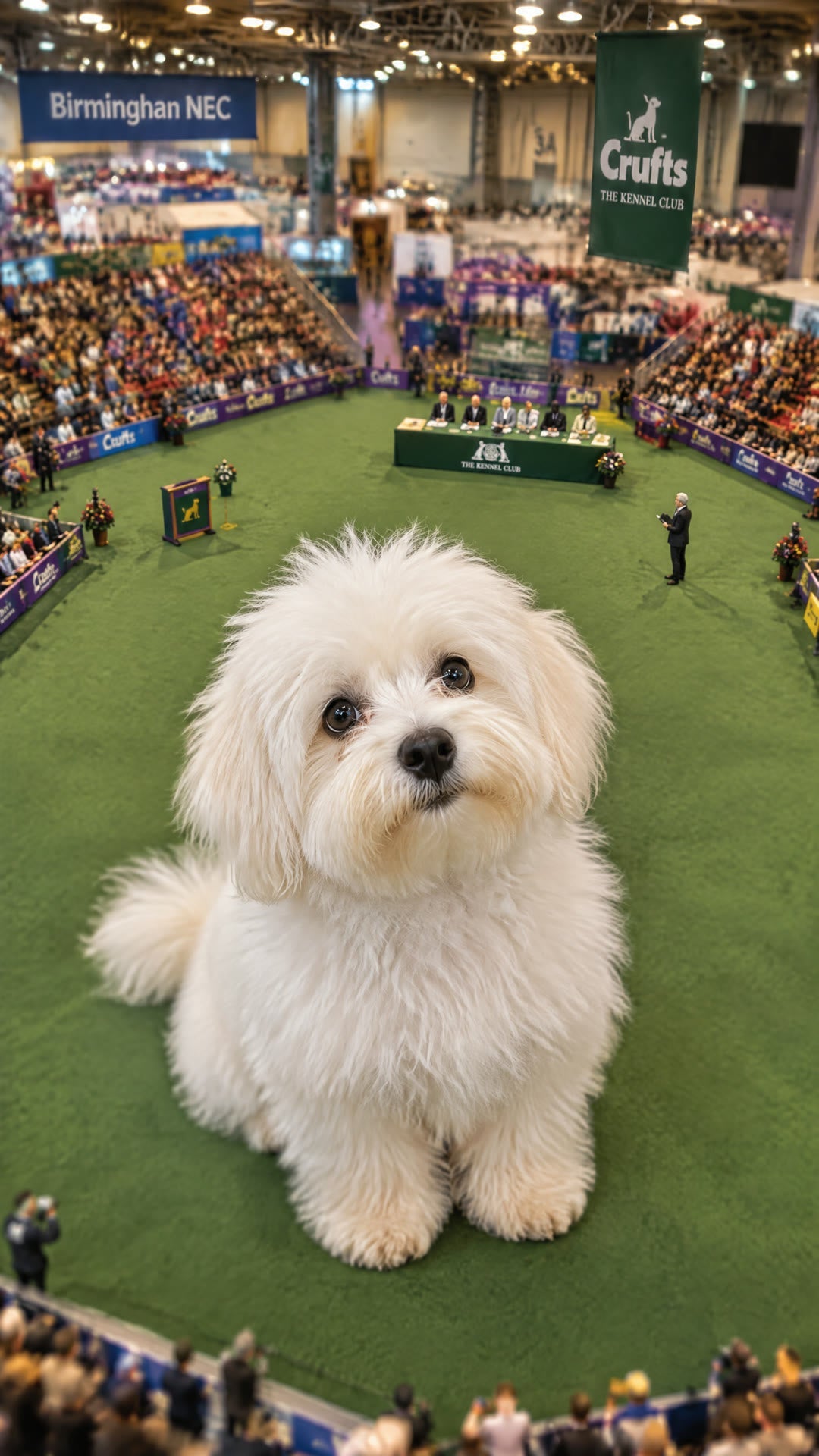
In the final ring a Pekingese, a Great Dane and a Poodle can stand side by side. The judge is not asking which dog is prettiest. The question is: which of these dogs is closest to the written ideal of its own breed? That is why a tiny toy breed can beat a magnificent working dog.
In 2021 the Westminster winner was a Pekingese named Wasabi. The moment his name was announced, he simply lay down flat on the podium and looked up at the crowd as if to ask what all the fuss was about. His grandfather, Malachy, had won the same show in 2012. Show dogs, like show results, run in families.
What the winner actually gets
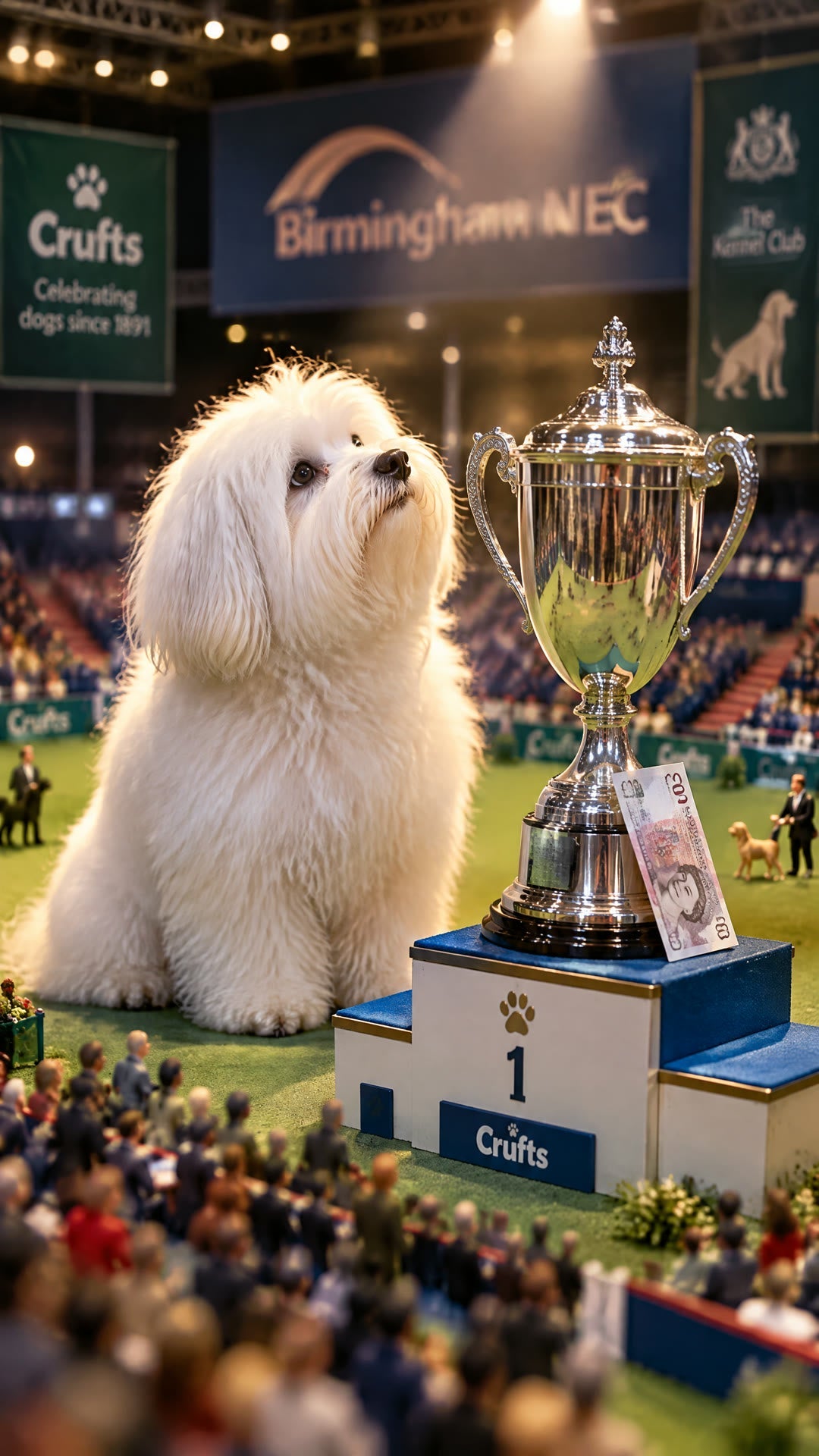
Here is the number that surprises everyone. The winner of Best in Show at Crufts, the largest dog show on Earth, receives a trophy and £100. The winner at Westminster receives a trophy and no prize money at all. Instead the Westminster champion spends the next day as a celebrity: ringing the opening bell at the New York Stock Exchange, posing for the cameras, and being served steak on a silver platter at Sardi's, the famous Broadway restaurant. In 2008 the Beagle champion Uno went further still and was invited to the White House.
| Show | Prize money | What the champion really gets |
|---|---|---|
| Crufts (UK) | £100 plus the Best in Show trophy | The title of the world's biggest show, worldwide press, demand for the dog's puppies |
| Westminster (USA) | None | A trophy, the NYSE opening bell, lunch at Sardi's, a TV audience of millions |
| FCI World Dog Show | None (title only) | The title "World Winner", recognised by kennel clubs in nearly 100 countries |
The real reward: a champion's puppies
Nobody spends a fortune for £100. The real reward begins after the show. A champion's puppies cannot be bought at any price: the breeder decides who receives one, and the waiting list is made up of other breeders from around the world who want that bloodline in their own kennels. Stories of buyers offering blank cheques for a champion or its offspring are part of dog show folklore, and they are not exaggerated. A Best in Show title turns a dog into the most sought-after parent in its breed.
That is what the whole year was for. The breeder was not chasing prize money. They were trying to prove one thing in public, in front of a judge who has seen thousands of dogs: my dog is the ideal of its breed. For that single sentence, this circus has gone on for more than 150 years.
What this looks like at Kim's Pups

We handle our own dogs at championship shows in Korea and at FCI shows abroad, such as the Vietnam Championship Dog Show in Hanoi. For us the ring is not about the ribbons. It is a public test of whether our breeding is on the right track, judged by people who do not know us. The same standard that wins Best of Breed is the standard we use when we match a puppy to a family: correct structure, a healthy coat, and above all a happy, confident temperament. A puppy that enjoys the ring is a puppy that enjoys people, and that is the dog you want at home. You can read about each breed's history and standard in our Breedpedia.
Frequently asked questions
How is a show dog chosen?
The breeder selects a show prospect from the day a litter is born, looking for the one puppy closest to the written breed standard in structure, head, coat and movement. Many litters produce none, and a kennel can go several years without a show-quality puppy.
How are show dogs trained?
By a professional handler, through play. Show dogs learn to stand, move and be examined as a game with treats and praise. Nothing is forced, because judges can see on a dog's face whether it is enjoying the ring, and the dogs that enjoy it are the ones that win.
How much does it cost to campaign a show dog?
At the top of the sport a single season can cost hundreds of thousands of dollars, covering the handler's fees, travel to dozens of shows, grooming and advertising. Most exhibitors spend far less, but a serious national campaign is a major investment.
How does a dog win Best in Show?
It climbs a tournament ladder on the day: it wins its age class, then Best of Breed, then its group, and finally competes against the other group winners in the Best in Show ring, where the judge chooses the dog closest to its own breed's standard.
How much prize money does the Best in Show winner get?
Very little. Crufts awards a trophy and £100. Westminster awards a trophy and no cash at all, although the champion rings the opening bell at the New York Stock Exchange and is treated to lunch at Sardi's the next day.
Why do people spend so much on dog shows if there is no prize money?
Because a Best in Show title proves that a dog is the ideal of its breed. The champion's puppies are then wanted by breeders all over the world and cannot be bought at any price, which is where the real value of the title lies.
Who was Wasabi the Pekingese?
Wasabi won Best in Show at Westminster in 2021 and famously lay down flat on the podium the moment his win was announced. His grandfather Malachy had won the same title in 2012.
Does Kim's Pups compete in dog shows?
Yes. Our team handles our own dogs at championship shows in Korea and at FCI shows abroad, including the Vietnam Championship Dog Show in Hanoi, with our Pomeranian and Coton de Tulear.
Want a puppy from show-tested parents?
Kim's Pups raises Coton de Tulear, Mini Bichon, Maltipoo, Poodle, Pomeranian and Maltese puppies in Korea and hand-carries them in the cabin to families worldwide. Tell us your country and we will explain how it works.
Contact Kim's Pups